Graduate Faculty Highlight
School of Education
Beyond Studying Education: Using Research to Improve It
Michael R.L. Odell, Ph.D.
Professor of STEM Education | School of Education
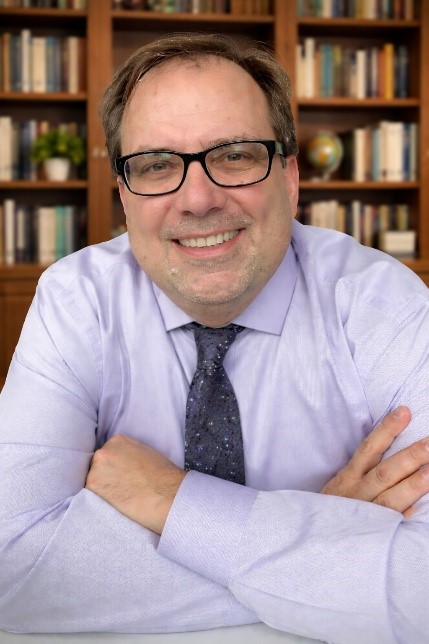
Michael R. L. Odell is a Professor of STEM Education whose career has centered on a fundamental question: How can research be used not simply to study educational problems, but to improve the systems that produce them?
His scholarship spans Improvement Science, STEM education, program evaluation, laboratory schools, educator preparation, and organizational change. Over his career, he has served as a researcher, evaluator, or consultant on initiatives supported by organizations including the National Science Foundation, NASA, the U.S. Department of Education, the Carnegie Foundation, state agencies, universities, school districts, and nonprofit organizations.
A Career Across the P-16 Educational System
Odell brings to his research and graduate mentorship experience across the educational continuum. He began his career as a public-school science teacher before earning a B.A. in Geosciences and M.A.T. in Science Education from The University of Texas at Dallas and a Ph.D. in Curriculum and Instruction from Indiana University.
His career has subsequently crossed the boundaries that often separate educational research from educational practice. He spent 12 years at the University of Idaho, where his roles eventually included Director of the Division of Teaching, Learning, and Leadership, with responsibility for undergraduate, master's, and doctoral programs in Curriculum and Instruction, Educational Leadership, and Special Education. His work included partnerships with public schools, state agencies, educational organizations, and communities throughout Idaho.
After serving at Illinois State University, Odell joined UT Tyler in 2006 as the endowed Sam and Celia Roosth Chair. His leadership at UT Tyler has included serving as founding Director of the School of Education and Vice President for Sponsored Research, as well as leading major STEM education, teacher preparation, research, and school-university initiatives through the UT Tyler Ingenuity Center. This breadth of experience informs a view of educational research that extends from individual classrooms to schools, districts, universities, and larger educational systems.
Earlier in his career, Odell served as a National Space Grant Fellow at NASA Headquarters (1995–1997) and later as a GLOBE Fellow with the University Corporation for Atmospheric Research (UCAR), experiences that helped shape his long-term work in STEM education, educational research, international collaboration, and large-scale educational improvement.
The University Academy as a Laboratory for Improvement
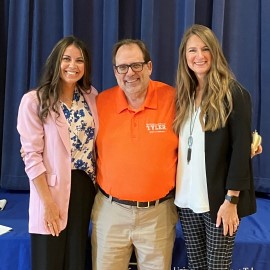
One of the most visible expressions of this philosophy is the UT Tyler University Academy, which Odell co-founded and helped design as a university-affiliated public laboratory school system.
The University Academy, a TEA A-Rated university charter school district serves more than 1,200 K–12 students across campuses in Tyler, Longview, and Palestine and functions not only as a public-school system but also as a setting for educator preparation, educational research, innovation, and continuous improvement.
For Odell, the University Academy demonstrates what a laboratory school can contribute to a modern university. It creates a place where university faculty, school educators, preservice teachers, graduate students, and community partners can work together on authentic educational problems. Ideas can move from research to practice, evidence from practice can generate new research questions, and improvements can be studied over time.
That work has also become part of his scholarship. In 2025, Odell co-edited The How and Why of Laboratory Schools with Teresa J. Kennedy, Barbara Meyer, and Jennifer Sarada. The international volume examines the purposes and contemporary roles of laboratory schools in research, innovation, educator preparation, and educational improvement. Odell and colleagues also contributed a chapter examining the UT Tyler University Academy as a P–16 research-based laboratory model for developing a sustainable STEM pipeline.
Designing a Doctorate Around Problems That Matter
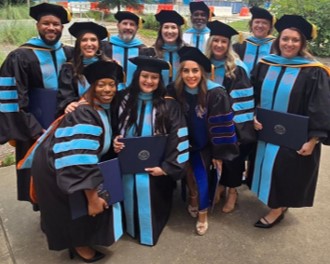
Odell also co-designed and served as the founding Coordinator of UT Tyler's Ed.D. in School Improvement, a practitioner-focused doctoral program built around Improvement Science and the Dissertation in Practice.
Rather than asking experienced educators to step away from their professional settings to study educational problems at a distance, the program was designed so that doctoral students investigate consequential Problems of Practice within the educational organizations in which they work.
The program's distinctive three-year structure aligns doctoral study with the school calendar and Plan-Do-Study-Act improvement cycles. Students learn to examine systems, identify root causes, evaluate evidence, implement and study changes, and use what they learn to guide subsequent improvement. Since welcoming its first cohort in 2020, the program has grown to seven cohorts and approximately 189 doctoral students by Fall 2026.
The program is affiliated with the Carnegie Project on the Education Doctorate (CPED), and Odell participates in national conversations about Improvement Science, the Dissertation in Practice, and appropriate standards of rigor for practitioner doctoral education. In 2026, for example, he participated in CPED's national professional learning series addressing rigor in measures used in PDSA cycles and Improvement Science dissertations.
Scholarship Focused on Educational Systems
Odell's recent and forthcoming books bring together many of the ideas that have emerged from his work across schools, universities, STEM education, and graduate education.
In 2025, he co-edited The How and Why of Laboratory Schools (Myers Education Press), examining how laboratory schools can connect research, educator preparation, innovation, and practice.
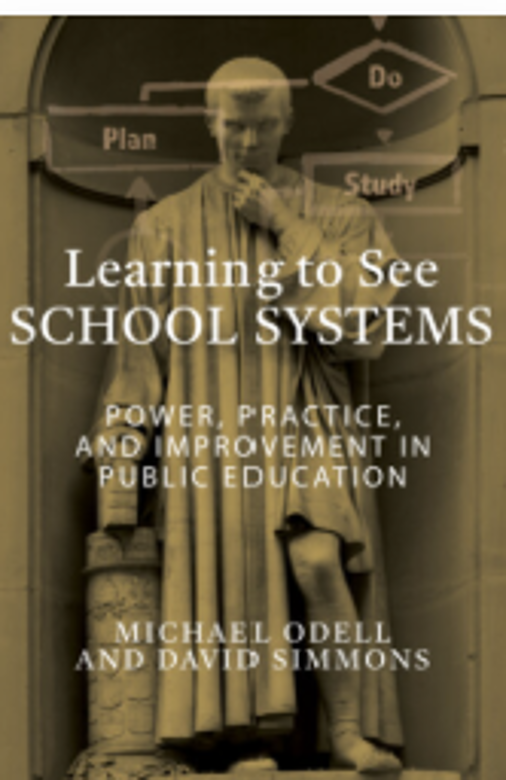
In 2026, Myers Education Press published two additional books: Learning to See the University: Power, Practice, and Improvement in Academic Systems and, with D. E. Simmons, Learning to See School Systems: Power, Practice, and Improvement in Public Education. Both focus on learning to look beyond visible symptoms to understand the organizational structures, practices, incentives, relationships, and systems that shape educational outcomes.
His forthcoming book with Jaclyn L. Pedersen, Aimee Dennis, and Jo Ann Simmons, Coherent School Design: Building Schools Where Everything Works Together, extends that work from understanding systems to intentionally designing them. It examines how schools can move beyond collections of disconnected programs and initiatives toward coherent systems in which mission, curriculum, instruction, assessment, professional learning, leadership, and improvement reinforce one another.
Odell is also co-editor with Teresa J. Kennedy of the forthcoming Springer Nature volume The GLOBE Program: From Observation to Action—Connecting Youth, Educators, and Scientists. The volume builds upon nearly three decades of his involvement with the international GLOBE Program and connects environmental science, citizen science, STEM education, teacher preparation, student research, and international collaboration. His work with GLOBE has helped prepare thousands of teachers and students to participate in authentic environmental science and STEM investigations.
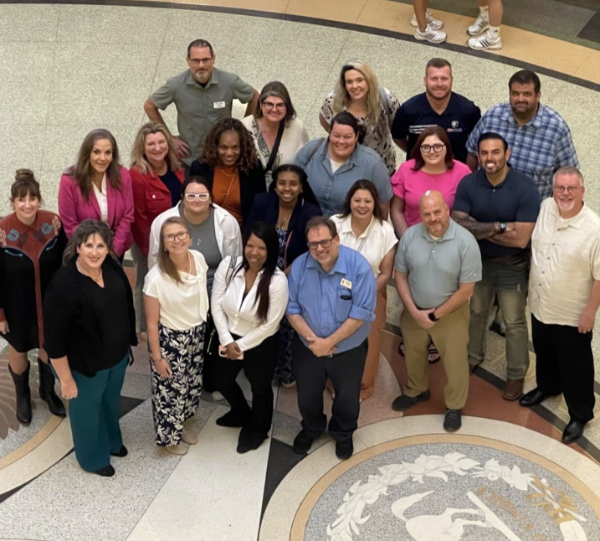
Graduate Mentorship: Developing Practitioner-Scholars
These different strands of Odell's career converge most directly in his work with graduate students.
His approach to graduate mentorship is grounded in the belief that rigorous research and practical impact should not be competing goals. Graduate students can learn sophisticated research and evaluation methods while working on problems that matter to schools, universities, communities, and the people they serve.
For doctoral students in particular, that means learning to become practitioner-scholars: professionals capable of identifying important problems, looking beyond symptoms to understand underlying systems, collecting and analyzing meaningful evidence, testing potential improvements, and translating what they learn into action.
The goal is larger than completing a dissertation. It is to develop educational professionals who can continue asking rigorous questions and leading evidence-based improvement throughout their careers.
For Odell, this represents the common thread across more than three decades of work in P–16 education:
Research matters most when it helps us understand educational systems well enough to improve them.