Advanced Materials and Manufacturing Institute (AM²I)
Mission
AM2I’s mission is to integrate multidisciplinary comprehensive laboratory scale innovations for the translation of new solutions, products, and services that benefit society.
Vision
AM2I’s vision is to develop advanced materials using modern manufacturing techniques to provide engineering solutions in various economic sectors, including healthcare, energy, aerospace, amd agriculture.
About AM2I
AM2I’s goal is to attract and secure research resources and provide research support in the fields of advanced manufacturing, materials characterization, and cellular and molecular biology. This includes:
- Developing next-generation advanced materials and manufacturing innovations through basic and applied science research.
- Collaborating with industrial sectors to enable materials design and manufacturing innovations through research projects and shared facilities.
- Providing the state-of-the-art material characterization facilities at UT Tyler accessible to faculty and students while enabling our industrial partners to solve current problems in materials and manufacturing.
- Translating the advanced research findings to educate the next generation of researchers, scientists, and engineers who are the next US leaders in materials and manufacturing sectors
In addition, AM2I aims to provide the following benefits to the university.
- Facilitating research collaborations between College of Engineering faculty and School of Medicine faculty at UT Tyler to enable a broad cross-discipline of projects to attract external funding.
- Providing undergraduate and graduate students from different disciplines a hub to perform multidisciplinary research and prepare them for career success.
- Promoting collaborations with community partners, thereby enabling the university to secure additional funding for research initiatives.
Researchers
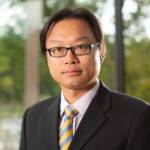 Director: Dr. Shih-Feng Chou, Brazzel Associate Professor, Mechanical Engineering, College of Engineering, The
University of Texas at Tyler, Tyler, Texas, USA
Dr. Chou received his PhD degree in Materials Engineering from Auburn University. He is the current Ronald D. Brazzel endowed associate professor in Mechanical Engineering at UT Tyler and the supervisor of the Lance C. Hibbeler endowed Materials Science Lab. His research focuses on the processing-structure-property relationships of polymer materials and their applications in drug delivery and tissue engineering. He is currently developing a novel fiber platform for controlled delivery of biological and/or chemical agents to advance various current therapeutic issues. Dr. Chou’s goal is to develop the next generation drug carriers that will improve the therapeutic effectiveness of various diseases. Dr. Chou received multiple external funding, such as the American Heart Association grant, the UT System grant, as well as multiple UT Tyler internal seed grants. Dr. Chou is the liaison person leading the integration of the team of faculty from College of Engineering and School of Medicine at UT Tyler for collaborative research.
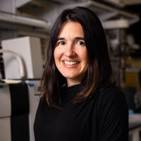 Faculty Member: Dr. Carla Lacerda, Assistant Professor, Chemical Engineering, College of Engineering, The University
of Texas at Tyler, Tyler, Texas, USA
Dr. Lacerda received her PhD degree in Chemical Engineering from Colorado State University. Her current research involves the development of in vitro cell and organ culture models of the cardiovascular system to study the effects of mechanical stimuli on cells and tissues. She employs fabrication techniques such as 3D bioprinting and mechanical stimulation reactors to understand how cells respond to their local environment. Her work will facilitate the development of new drugs to slow or reverse disease progression and to improve the design of engineered tissues and organs. Dr. Lacerda received pilot funding from an NIH PRIDE program to conduct an in vivo investigation of congenital defect-induced mechanics affecting the development of aortic valve disease.
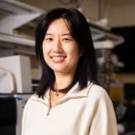 Faculty Member: Dr. Zishu Cao, Assistant Professor, Chemical Engineering, College of Engineering, The University
of Texas at Tyler, Tyler, Texas, USA
Dr. Cao received her PhD degree in Chemical Engineering from the University of Cincinnati. Her research focuses on advancing technologies in energy, sustainability, and environmental protection through innovative materials design and engineering. Her research group develops zeolite-based catalysts with tailored morphologies, and chemical compositions to optimize reaction kinetics and mass transport for the sustainable production of fuels and value-added chemicals from biomass and other feedstocks. A major research emphasis is the nanoengineering of microporous zeolites, with particular attention to understanding their structure–property relationships, crystallization mechanisms, and catalytic performance. Her group also develops advanced polymeric and inorganic membranes for water treatment, molecular separations, and energy applications. Current research includes the design of antifouling membranes for efficient water purification and selective separation of small biomolecules relevant to biomedical applications, as well as the development of cost-effective, high-performance ion-exchange membranes for redox flow batteries promising for large-scale renewable energy storage. Dr. Cao’s research has been supported by the University of Texas System Rising STARs Award, the U.S. Department of Agriculture (USDA), and the National Science Foundation (NSF).
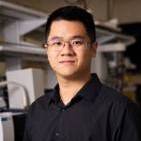 Faculty Member: Dr. Shuhao Liu, Assistant Professor, Chemical Engineering, College of Engineering, The University
of Texas at Tyler, Tyler, Texas, USA
Dr. Liu received his Ph.D. in Chemical Engineering at Texas A&M University. His research focuses on advanced nanomaterials and surface/interface technologies with applications in sustainability, healthcare, agriculture, and energy. Dr. Liu is currently interested in nanomaterial synthesis and functionalization for long-term, targeted chemical delivery systems, particularly asphaltene inhibitor release for reservoirs and pesticide delivery for agricultural production. Dr. Liu has published 35 author and co-authored peer-reviewed papers in leading journals such as ACS Applied Materials & Interfaces, Journal of Food Engineering, Chemical Engineering Journal, and Advanced Materials Interfaces. He received the Rising STARs Award from the University of Texas System in 2024 and recently received NSF funding to support his research.
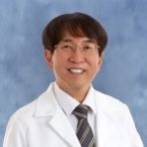 Faculty Member: Dr. Mitsuo Ikebe, Professor and Chair, Cellular and Molecular Biology, School of Medicine, University
of Texas at Tyler, Tyler, Texas, USA
Dr. Ikebe received his PhD degree at the Osaka University, Japan. His research interests include unconventional myosin, pleural fibrosis, phosphorylation, myofibroblast, and stress fiber.
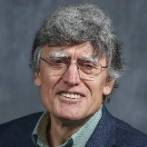 Faculty Member: Dr. Andrey Komissarov, Professor, Cellular and Molecular Biology, School of Medicine, University of Texas
at Tyler, Tyler, Texas, USA
Dr. Komissarov received his PhD degree at the Lomonosov Moscow State University. His research focuses on developing preclinical methods in fibrinolytic therapy of empyema or lung injuries. His laboratory employs echogenic fibrin targeted liposomal carriers to encapsulate fibrinolytic drugs. Dr. Komissarov is also interested in effect of using microfibers as the carrier for the fibrinolytic drugs. His lab is currently evaluating drug delivery using liposomes, microfibers, and microparticles via in-vitro and ex-vivo models. Dr. Komissarov has co-authored more than 60 publications in peer-reviewed journals and received multiple NIH awards.
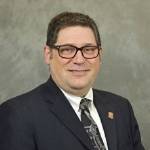 Faculty Member: Dr. Pierre Neuenschwander, Professor, Cellular and Molecular Biology, School of Medicine, University of Texas
at Tyler, Tyler, Texas, USA
Dr. Neuenschwander received his PhD degree in Biochemistry & Molecular Biology from Stony Brook University. His research has been funded by the NIH as well as the AHA to study materials with hemocompatible surfaces.
 Faculty Member: Dr. Galina Florova, Professor, Cellular and Molecular Biology, School of Medicine, University of Texas
at Tyler, Tyler, Texas, USA
Dr. Florova received her PhD degree in Biology (Genetics) at the Institute for Genetics and Selection of Industrial Microorganisms in Moscow, Russia. Her research involves basic and translational research in cell and molecular biology using animal models of pleural injury. Dr. Florova has co-authored more than 46 publications, and her research is currently funded by the NIH.
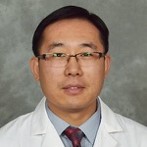 Faculty Member: Dr. Guoqing Qian, Associate Professor, Cellular and Molecular Biology, School of Medicine, University
of Texas at Tyler, Tyler, Texas, USA
Dr. Qian received his PhD degree in Toxicology in the Department of Environmental Health Sciences at the University of Georgia. Dr. Qian has published more than 50 peer-reviewed articles. His research is funded by NIH to study novel targets in pleural and pulmonary fibrosis. Dr. Qian’s current research focuses on the novel immune and inflammatory molecules and pathways that are critical for the development of pulmonary/pleural fibrosis, COPD and PAH. His research interests lie in posttranslational modification, cell phenotypic modulation, migration and invasion, apoptosis, druggable target discovery, and biomarker development.
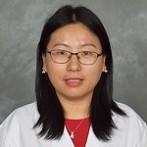 Faculty Member: Dr. Xia Guo, Associate Professor, Cellular and Molecular Biology, School of Medicine, University
of Texas at Tyler, Tyler, Texas, USA
Dr. Guo received her PhD degree in Physiology and Pharmacology at the University of Georgia. Her research focuses on cardiovascular diseases and metabolic diseases, including atherosclerosis, aneurysm, neointima formation, vascular stiffness, hepatic steatosis, and obesity, etc. Dr. Guo has excellent research experience in cell phenotypic regulation, gene transcriptional regulation, screening of signaling pathways/factors that mediate gene function, and generation of conditional knockout mice to examine the biological function of novel genes. She has published about 40 peer-reviewed papers in reputable journals including Circulation Research, ATVB, Journal of Hepatology, Cardiovascular Research, etc. She has also served on American Heart Association (AHA) fellowship and multiple National Institutes of Health (NIH) study sections as an ad hoc reviewer. Dr. Guo’s research program has been continuously funded by the AHA and NIH.
Research Support