Energy and Environment Research Center (EERC)
Mission
To accelerate the global shift to distributed energy sources and healthy living environments, we will use two residential testbeds to develop, validate, and scale affordable building solutions while educating students and collaborating with industrial partners. These testbeds will integrate advanced geothermal heat pumps, wind power, and solar energy to create high-performance residential buildings in tandem with evaluating indoor and outdoor environments for healthy living.
Vision
Our vision is to be the leader in development of creative solutions focusing on affordable building and environmental technologies. This vision also encompasses advancements in healthy buildings, reliable, and energy-saving technologies.
About EERC
The center is dedicated to clean distributed energy resources for increased redundancy of energy delivery for residential consumers. This includes 1) evaluation of solar PV for providing local power, 2) geothermal energy for increased performance of space cooling, space heating and water heating, and 3) wind turbine performance (planned 2027-28).
The two houses on the UT-Tyler campus will be used to test mature and prototype building equipment and envelope technologies. Technologies such as split-system heat pump water heaters, active building envelopes and roof coatings can be evaluated at these test homes in collaboration with industry partners and national laboratories. The houses will allow the coupling of solar PV, geothermal wells, and a windmill to the demands of the houses for energy. The occupant loads (sensible and latent) will be simulated by advanced controls. The 3D rendering by google® earth are shown below.
EERC Co-Director: Dr. Nael Barakat, Chair and Professor, Mechanical Engineering, College of Engineering, University of Texas at Tyler, Tyler, Texas, USA
Dr. Barakat is a fellow of the American Society of Mechanical Engineers (ASME) and a registered professional engineer in Ontario, Canada. Dr. Barakat’s expertise and interests include Mechatronics, Control, Robotics, Energy Harvesting, Nanotechnology, and Engineering Education. He is also a certified Program Evaluator (PEV) for ABET. He has over 80 peer reviewed publications and numerous training workshops around the globe aiming at improving engineering education. Dr. Barakat holds a Ph.D. in Mechanical Engineering from McMaster University, Ontario, and a Masters Degree from Concordia University, Canada. He is also the recipient of multiple awards including the ASME Edwin F. Church Medal (2020), ASME McDonald Mentoring Award (2014), ASME Dedicated Service Award (2011), and GVSU Distinguished Early-Career Award (2010). Dr. Barakat is active with related professional organizations and is currently serving on the executive boards of the ASME Engineering Management Division and Technology & Society Division. He also served as the past chair of the Engineering Ethics Division at the American Society of Engineering Education (ASEE) as well as in multiple leadership positions with ASME.
EERC Co-Director: Dr. Joseph Rendall, Assistant Professor, Mechanical Engineering, College of Engineering, University of Texas at Tyler, Tyler, Texas, USA
Dr. Joseph Rendall conducts cutting-edge research in water heating, heat pumps, and energy-efficient HVAC systems, focusing on the fundamental physics that drive these technologies. His expertise includes thermal energy storage, phase change material heat exchanger and sensor design, and system-level performance analysis. More recently, he has been investigating magnetocaloric heat pumps, an emerging technology with the potential to outperform conventional heat pumps through a more reversible entropic-based heating and cooling process.
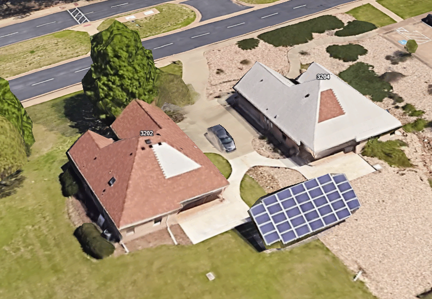
Figure 1 - 3D Rendering of EERC
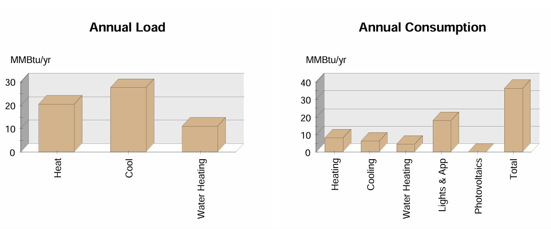
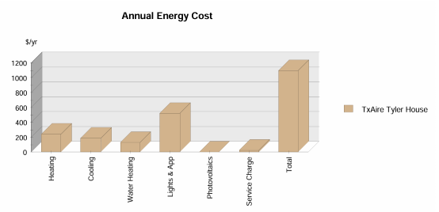
Figure 2 - Annual energy cost for the baseline home with HERS rating of 65 which is significantly better than existing homes and many new constructions. The patriot house has a HERS rating of 52 and -11 when considering the Solar PV.
Research Support
Research House Funding Acknowledgement: Funding for the TXAIRE Homes (now research houses part of the EERC) has been provided by The State of Texas from the Texas Emerging Technology Fund and The University of Texas at Tyler.
Research House Overview
More energy efficient and healthier buildings are the two primary elements of the rapidly expanding “green building” market. That market is projected to grow by 300 Billion dollars in the U.S. In Texas, sustainable development will become increasingly important as rapid population growth (approximately 1000 people per day) increasingly stress land, water and energy resources. ’s role in the creation and commercialization of new building products that meet the needs of this growing marketplace will increase job creation and retention in Texas for both existing and new companies. The Research and Demonstration Houses will be a primary pathway by which showcases and evaluates these new products.
The Research and Demonstration Houses have been designed to serve as realistic test facilities for developing and demonstrating new technologies related to energy efficiency, indoor air quality, and sustainable construction materials and methods. Two houses are being constructed on the UT Tyler campus. The first of these (“Tyler House”) demonstrates a wide range of energy efficiency renovation features that result in a house that will consume only 50% of the energy used by an average home. Our second house (“Patriot House”) is even more efficient. Through the use of a wide array of components, it will be capable of generating all of the energy that it requires over the course of the year – a “net-zero energy” home. Energy efficiency products from many Texas based companies will be showcased in these Homes. The over-arching goal of the Houses project is to demonstrate that “net-zero” energy performance can be achieved at a cost that is competitive with conventional house construction – approximately $135/ft2.
The Houses are fully instrumented testbeds, making possible full testing and analyses of roof, wall, window, and slab building envelope components. All mechanical systems are also fully instrumented, and include multiple systems to facilitate comparison of performance. A wide range of energy efficiency projects are being scheduled for the Houses. These range from verification of building envelope products such as high reflectivity roofing shingles and reflective barrier wraps, to sophisticated geothermal ground-loop cooling systems that combine several technologies to achieve new hybrid HVAC system performance. In several areas, prototype hardware concepts that will be tested in the houses should result in patented new products for companies as well as for UT Tyler researchers.
House Specifications
House 1 (Tyler House)
- Energy-efficient (HERS 65) and air-tight (0.18 ACH)
- Conventional wall framing with blown-fiberglass insulation (R-15)
- Vented attic with blown-fiberglass ceiling insulation (R-38) - 3 roof vent options (static vents, wind turbine, solar-powered fan)
- Aluminum-frame windows with double-pane glass (U=0.55, SHGF=.36)
- Ducted single-split heat pump in attic (18.2 SEER, 9.7 HSPF) with advanced humidity control & air cleaning
- Ductless multi-split heat pump in house (14.5 SEER, 8.5 HSPF)
- Heat pump water heaters (2.35 EF) in house and attic
- Low VOC finishes (floor stain, paint, cabinets, etc.)
- Sound-proof interior wall board
- Poured concrete vanity top in master bath
- High-efficiency compact fluorescent lighting
- Low- or no-VOC paints and stains
- Garage ventilation fans
- Residential fire sprinkler system
- Energy-Recovery Ventilation (ERV) systems for providing fresh outdoor air
- Security system with remote monitoring and control
- Water conserving irrigation
House 2 (Patriot House)
- More energy-efficient (HERS 52) and air-tight (0.08 ACH)
- Net-Zero Energy (HERS -11) with 7.4 kW of solar photovoltaic panels
- Advanced wall framing with open-cell foam insulation (R-24)
- Unvented attic with open-cell foam insulated roof deck (R-24)
- Vinyl-frame windows with double-pane, low-E glass (U=0.33, SHGF=0.23)
- Ducted single-split system in attic (19.0 SEER, 9.0 HSPF) with advanced air cleaning
- Bore holes for future ground-coupled heat pump installation
- Heat pump water heater in house
- High solar reflectance shingles
- Wall board with gas contaminant removal capability
- Wireless lighting controls
- High-efficiency and longer-life LED lighting
- Solar light tube in master bath
- Recycled glass countertops
- Low-maintenance landscaping & rain water recovery
- Garage ventilation fans
- Residential fire sprinkler system
- Energy-Recovery Ventilation (ERV) systems for providing fresh outdoor air
- Security system with remote monitoring and control
- Water conserving irrigation
Researchers
Overview
Dr. Joseph Rendall’s research focuses on advancing water heating, heat pump, and HVAC technologies through a deeper understanding of the underlying physical processes. His areas of expertise include thermal energy storage, phase change material (PCM) heat exchanger and sensor design, and the evaluation of system-level performance. Recently, he has expanded his work to magnetocaloric heat pumps, an emerging technology that uses a mostly reversible magnetic effect to provide heating and cooling with the potential to surpass the efficiency of conventional heat pumps.
The overarching goal of Dr. Rendall’s research is to reduce the energy costs associated with water heating and HVAC systems, helping to ease the financial burden on moderate- and low-income households. Using the UT-Tyler research houses, he tests and evaluates both emerging and established technologies to improve energy efficiency, affordability, and real-world performance.
Examples of Dr. Rendall’s Research
Thermal stratification of sensible energy storage
The level of thermal stratification on sensible energy storage impacts the amount of available energy at the hottest and coldest temperature. This naturally occurring phenomenon is present in both chilled water storage and hot water storage. The instabilities of mixing in the storage often come from an inlet device (figures below) which can be designed to reduce mixing or increase mixing. The characterization of this phenomenon has been handled in literature with many difference nondimensional numbers (table below). Furthermore, CFD can be used to show the impact of inlet devices on the amount of mixing in stratified water.
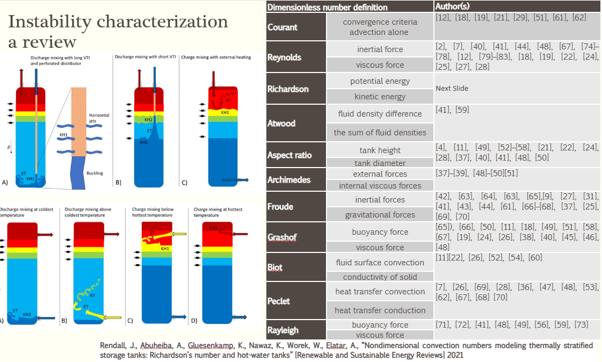 Figure 3 - Review of instabilities and nondimensional numbers used to define mixing
in thermally stratified regions
Prototype development
Dr. Rendall has led multiple inventions in water heating and thermal energy storage technologies (sensible and latent). Shown below are diagrams of patents Dr. Rendall’s led; a novel inlet device, a novel PCM storage method in stratified water, a novel PCM heat exchanger, and a novel PCM sensor. This innovation comes from hands on experience working with the technologies, experimental campaigns and first-principal models.
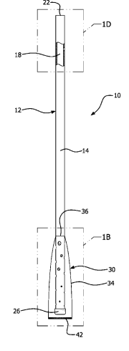
Figure 5 - Vertical insertion device (dip-tube) diagram [US 11768012]
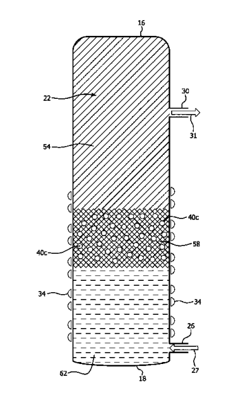
Figure 6 - Density controlled PCM capsules for increasing heating power [US 12429231]
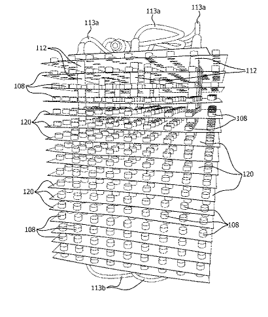
Figure 7 - Optimized heat exchanger for PCM storage [US 12-618619]
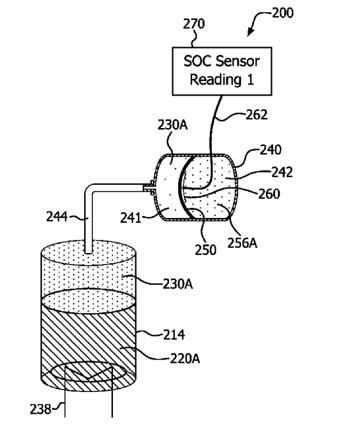
Figure 8 - Pressure based state of charge sensor [US 12-669270]