Nanomedicine Research Laboratory
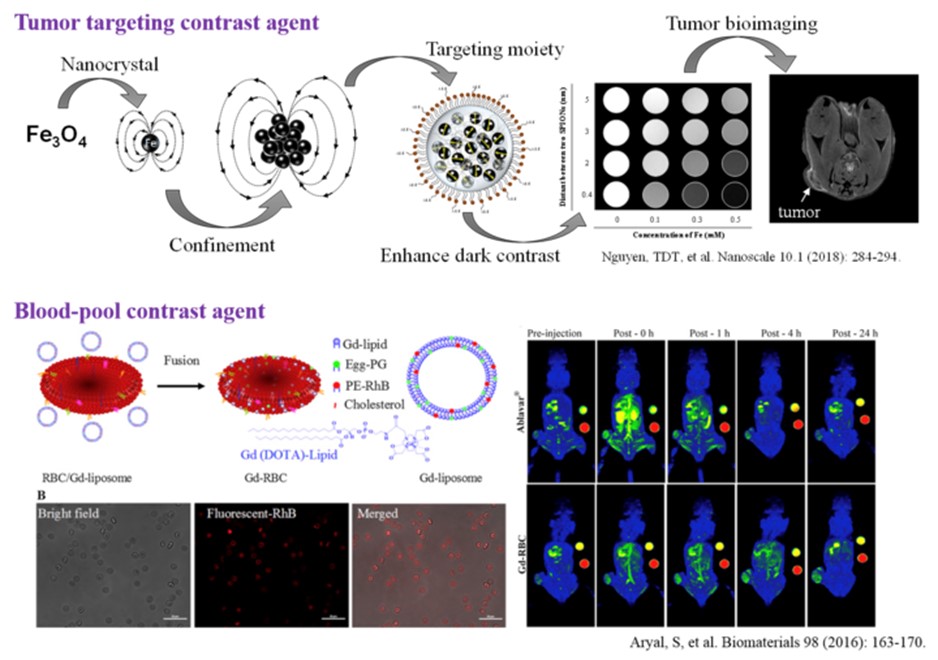
Diagnostic Imaging
The interrogation of diseased tissue over multiple spatial and temporal scales can provide fundamental cellular and molecular information for optimizing and monitoring therapeutic response, and for precisely guiding surgical interventions. Traditional anatomical imaging identifies pathological tissue but does not provide any direct or sufficient information on underlying physiological or biochemical processes which are critical for assessing the availability of specific drug targets. Herein, magnetic resonance imaging and nuclear imaging have been employed in a way to enhance the spatial resolution using biodegradable/biocompatible nanoparticulate system.
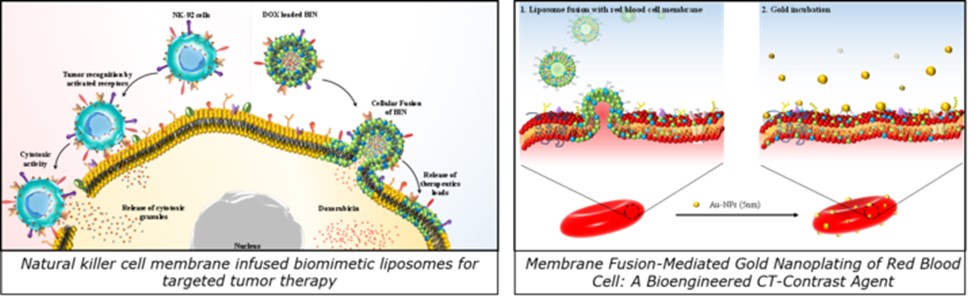
Biomimetic Nanodevice for Targeted Delivery
Learning from nature has inspired the creation of intelligent devices to meet the increasing needs of the advanced community and also to better understand how to imitate biology. Biological materials are highly organized from the molecular to the nanoscale, microscale and macroscale, often in a hierarchical manner with intricate nanoarchitecture that ultimately makes up a myriad of different functional elements. Properties of the materials and surfaces result from complex interplay between the surface structure, morphology, and physicochemical properties. Herein, we have demonstrated a biomimetic system in order to enhance the plasma residence time of nanocarrier, which is one of the key parameter for drug delivery system. We have implemented naturally occurring phospholipids, cellular membrane, and/or biocompatible/biodegradable polymers to engineer biomimetic nanodevices.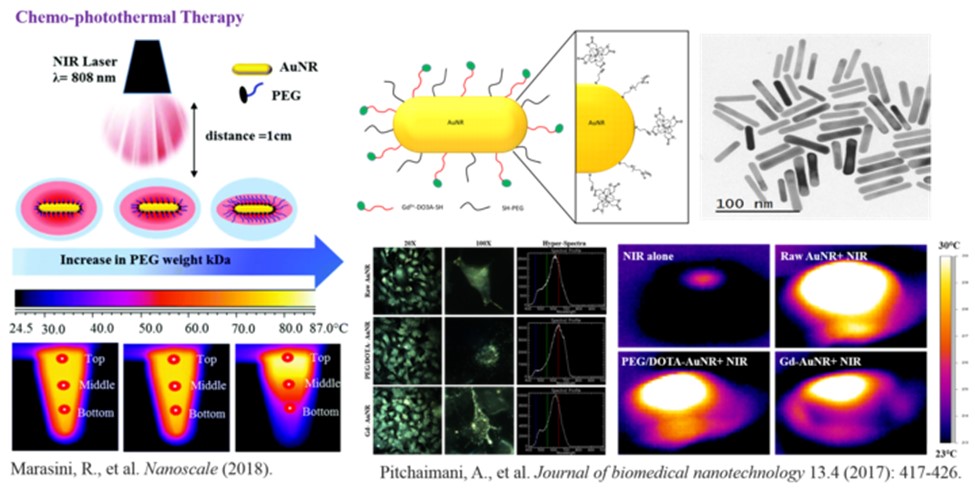
Combinatorial Treatment
Combined therapy with two or more drugs or modalities provides a promising strategy to suppress drug resistance, as different drugs may attack diseased cells at varying stages of their growth. Now, it is well known that a variety of drug combinations can induce synergisms among them and prevent disease recurrence. However, one major challenge of combinatorial therapy is to unify the pharmacokinetics and cellular uptake of various drug molecules, which will allow precise control of dosage and scheduling of the multiple drugs, thereby maximizing the combinatorial effects. One such efforts have been put forth by precisely loading two different drugs into the same drug delivery nanoparticle and/or contrast agents.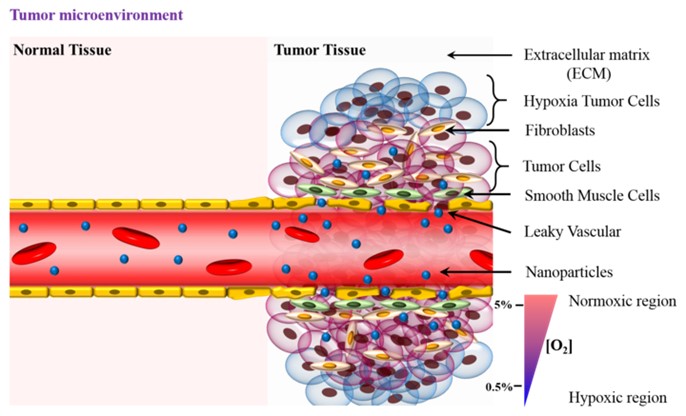
Stimuli Responsive Drug Delivery System
Stimuli-responsive systems recognize their microenvironment and react in a dynamic way, mimicking the responsiveness of living organisms. Nanoscale stimuli-responsive devices may be sensitive to specific endogenous stimuli, such as a lowered interstitial pH, a higher glutathione concentration or an increased level of certain enzymes such as matrix metalloproteinases. At the cellular level, pH sensitivity can either trigger the release of the transported drug into late endosomes or lysosomes, or promote the escape of nanocarriers from lysosomes to cell cytoplasm. Considering the hypoxic and acidic tumor microenvironment, such efforts have been put forward to trigger drug release from nanoscale device.