Research Centers and Scholarships
Laboratory Equipment
Our laboratory is equipped with state-of-the-art asphalt, binder, and aggregate testing systems that simulate plant production and field compaction, enabling accurate performance prediction. The equipment supports both small- and large-batch mixing, specimen preparation, and standardized testing for rutting, cracking, and fatigue resistance. By combining advanced mixing, compaction, and characterization capabilities, the facility allows researchers to evaluate durability, resilience, cost efficiency, and environmental impacts, providing field-informed data that supports balanced mix design and the development of safer, longer-lasting pavements.
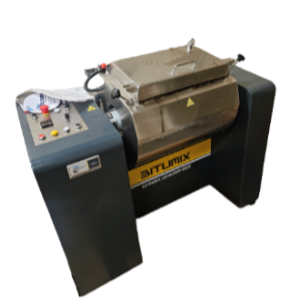
Automatic Laboratory Mixer BITUMIX
is ideal for producing big batches of asphalt mixtures that simulate the plant mixing process and can be used to produce big asphalt slabs for mixture testing and characterization
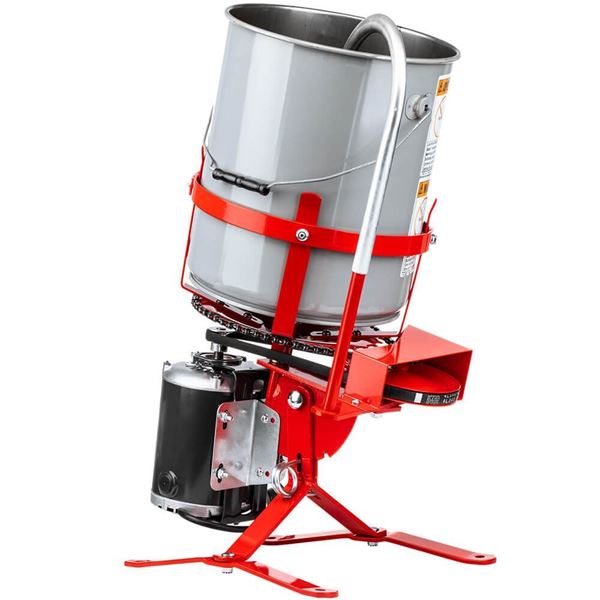
Heavy-Duty Portable Asphalt Mixer
allows preparation of small batches of asphalt concrete in the lab to be used for various tests
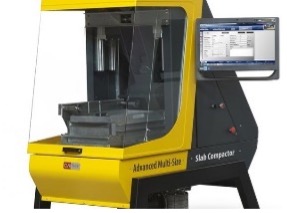
Slab Compactor
can compact asphalt slabs to a target density, applying specific loads corresponding to those of pavement rollers used in highway construction Produces uniform slabs at target density for wheel‑tracking, SCB/IFIT and coring.
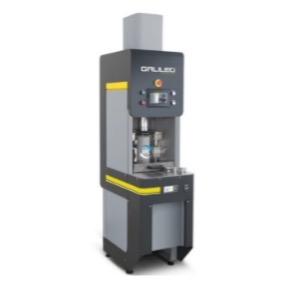
Gyratory Compactor GALILEO
is used in the lab to prepare asphalt mix specimens of a given height at a predetermined density for the subsequent testing of their mechanical properties Compacts cylindrical specimens for Superpave mix design and performance testing.
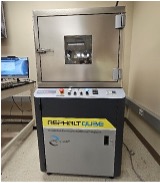
AsphaltQube
is utilized in the lab to test permanent deformation, cyclic compression, indirect tensile stiffness, indirect tensile fatigue, crack propagation, direct tension- compression, dynamic/complex modulus) plus triaxial compression, four-point and two-point stiffness, and fatigue flexural tests Servo‑hydraulic control enables cyclic compression, IDT modulus/fatigue, and bending modes.
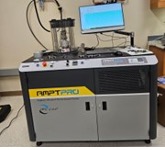
AMPT Pro
is one of the most versatile and important equipment in the asphalt laboratory. Dynamic modulus, Flow number, Flow time, Uniaxial Fatigue / SVECD, Overlay test, Semi-Circular Bend, Indirect Tensile Dynamic Modulus, iRLPD, and Small Diameter Dynamic Modulus and SVECD tests are performed using this equipment in the lab Produces |E*| master curves, flow number/time, and fatigue indices for M‑E/BMD.
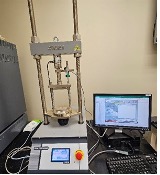
Balanced Loader
is designed to automatically perform most of the tests included in asphalt Balanced Mix Design procedures, including IDEAL-CT, IDEAL-RT, Indirect Tensile Strength, and Semi-Circular Bend tests. It is also suitable for Marshall, CBR, UCS, and other displacement-controlled tests
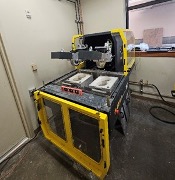
Double Wheel Tracker
can be used to determine the susceptibility of asphalt mix to deform under load by measuring the rut depth formed by repeated passes of a loaded wheel at a fixed temperature. This machine conforms to both the AASHTO Hamburg Type and EN test methods Wet/dry wheel‑tracking quantifies rutting and stripping susceptibility.
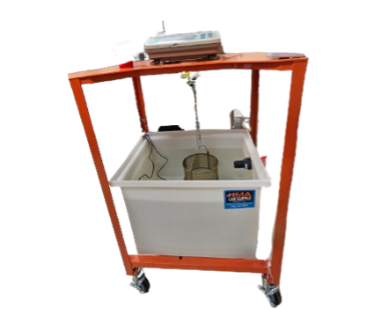
Specific Gravity Frame and Basket
is used in the pavement lab to determine the specific gravity of specimens by allowing
us to weigh the samples in both air and water Determines Gmb by weighing in air/water;
pairs with Gmm for Va.
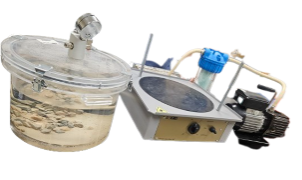
Large size Pycnometers
is used for determining the theoretical maximum specific gravity of uncompacted bituminous paving mixtures. They can also be used for the calculation of the percent of air voids in compacted bituminous mixtures and the amount of bitumen absorbed by the aggregates Provides Gmm for volumetrics (VMA, Va).
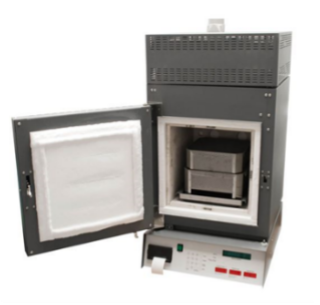
NCAT Asphalt Content Furnace
is used to automatically determine the asphalt content of paving mixtures from 1,200–1,800g in just 30–45 minutes. Samples up to 5,000g can be processed at extended testing times Ignition method allows aggregate recovery for post‑burn gradation.
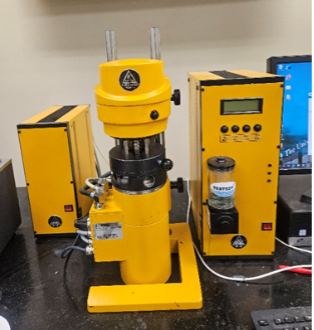
Dynamic Shear Rheometer (DSR)
performs the critical rheological characterization analysis required for the Superpave Performance Grade (PG) classification of asphalt binders. This device is also used for MSCR test and determination of G*| and phase angle of asphalt bitumen at different temperatures and frequencies Outputs complex modulus and phase angle; supports MSCR.
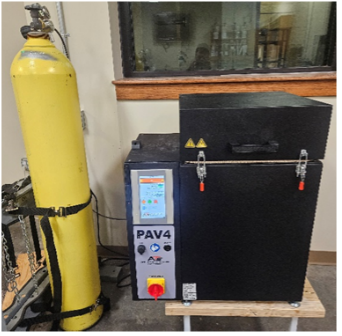
Pressure Aging Vessel
simulates in-service oxidative aging of asphalt binder through exposure to elevated temperatures in a pressurized environment. Asphalt binder is exposed to heat and pressure to simulate in-service aging over a 7 to 10-year period
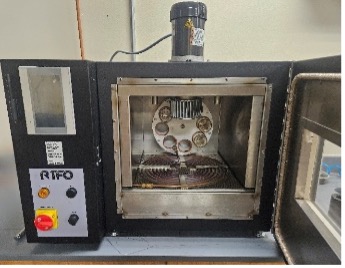
Rolling Thin Film Oven (RTFO)
is utilized in the laboratory to stimulate short-term aged asphalt binders for physical property testing. Asphalt binder is exposed to elevated temperatures to simulate manufacturing and placement aging. The RTFO also provides a quantitative measure of the volatiles lost during the aging process
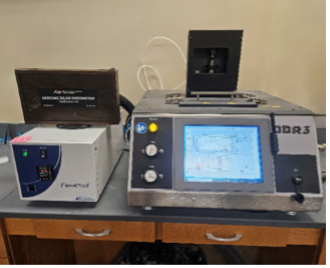
Bending Beam Rheometer BBR3
provides a measure of low-temperature stiffness and relaxation properties of asphalt binders. These parameters give an indication of an asphalt binder's ability to resist low-temperature cracking Calculates stiffness and m‑value to assess thermal cracking risk.
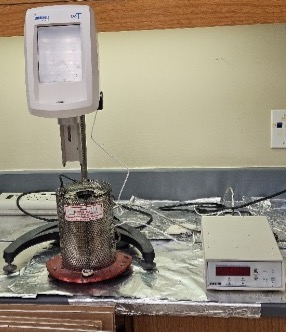
DV2T Viscometer
meets ASTM and AASHTO standards for high-temperature dynamic viscosity testing of asphalt binders. Asphalt binder products are characterized, and temperature/viscosity relationships are developed to estimate mixing and compaction temperatures in hot-mix design
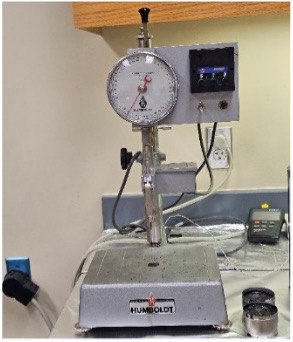
Asphalt Penetrometer
is used to examine the penetration of bituminous samples under a constant load, time, and temperature. Penetration Grading of the asphalt is obtained through penetration tests in the laboratory
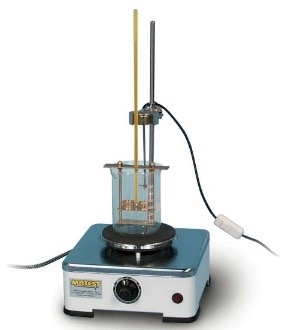
Ring and Ball Softening Point Apparatus
is used to test the softening point of asphalt, which usually lies between 35°C and 70°C
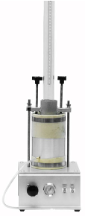
Laboratory Asphalt Permeameter
Laboratory Asphalt Permeameter s use the falling head method to measure the hydraulic conductivity of saturated 6 in (152 mm) diameter asphalt cores or laboratory-compacted specimens. Basically, this equipment is used to measure the permeability of an asphalt mix sample.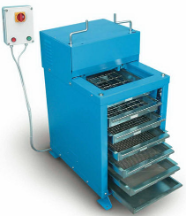
High Capacity Sieve Shaker
is utilized in the lab to determine the gradation of the aggregates that are to be used in the asphalt mixtures
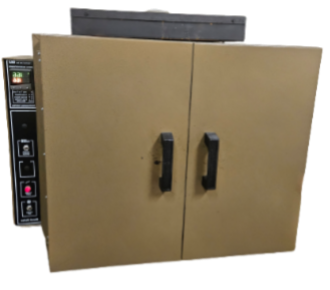
Ovens
The laboratory has ovens that heat the asphalt binders, mixtures, and samples to various temperatures. The ovens come with precise temperature control and can achieve required temperature changes in a very short time for more accurate testing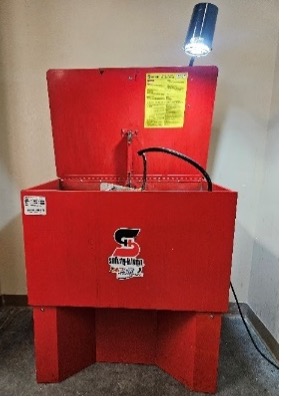
Solvent Parts Washer
is capable of cleaning asphalt laboratory equipment, samples, and tools quickly and easily. This equipment ensures the tools and equipment are ready for reuse without contamination from previous samples and materials. Also, it uses a recyclable solvent with minimal environmental effect
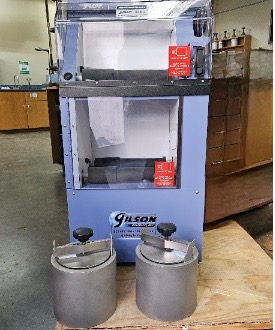
Micro-Deval Machine
meets current ASTM, AASHTO, and Canadian test methods, as well as more stringent TxDOT standards for the measurement of abrasion resistance and durability of fine and coarse aggregates. The equipment is equipped with sophisticated controllers and optical sensing system that controls and stops the test within fraction of a revolution for accurate results