The Frederiksen high-voltage power supply (0–6 kV DC) is used to provide a stable
and adjustable high electric field for material processing and electrical experiments.
In our laboratory, it is primarily used to polarize piezoelectric films, such as PVDF
and related polymer -based piezoelectric materials, by applying a high DC voltage
to align their internal dipoles and improve piezoelectric performance. The system
features controlled voltage adjustment, a digital voltage display, and safe high-voltage
output, making it suitable for preparing piezoelectric films for subsequent characterization
and use in piezoelectric nanogenerator (PENG) devices.
Equipment & Resources
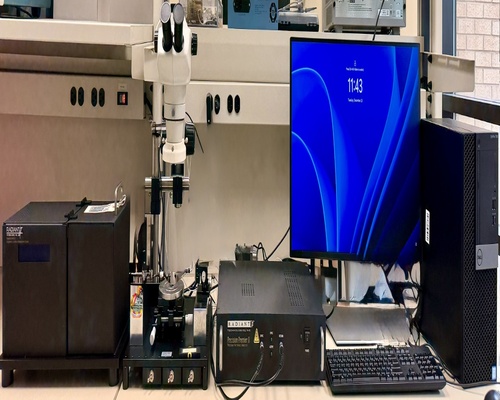
Precision Premier II with Dual e31 Piezoelectric Cantilever Measurement System
The Precision Premier II Ferroelectric Tester is an advanced system used to characterize the electrical and electromechanical properties of ferroelectric and piezoelectric materials. It supports multiple measurements such as hysteresis (P–E loops), leakage current, I–V, C–V, pulse testing, and piezoelectric characterization for both thin films and bulk materials. The system provides high measurement resolution with an 18-bit ADC (~32,000 data points) and operates at frequencies up to ~250 kHz with drive voltages ranging from ±10 V to ±500 V, which can be extended to 10 kV using an external high-voltage interface.
The Dual e31 Piezoelectric Cantilever Fixture enables simultaneous measurement of direct and converse e31 piezoelectric coefficients using a single cantilever sample, where one capacitor acts as an actuator and the other as a sensor. In our laboratory, this system is used for high-precision characterization of piezoelectric materials and nanogenerators, allowing us to evaluate polarization behavior, electromechanical coupling, and energy conversion performance in piezoelectric nanogenerators (PENG) and related functional materials.
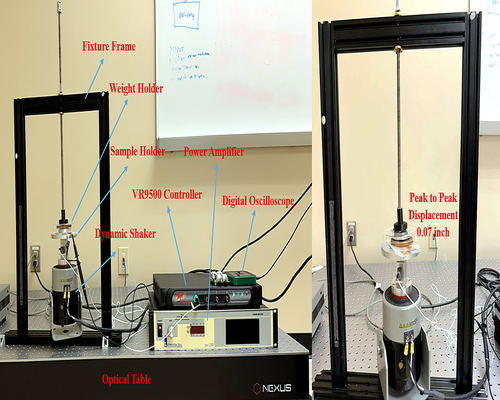
VR 9500 Vibration Shaker System with Gain Controller
The VR 9500 vibration shaker system is used to generate controlled mechanical vibrations
for experimental testing of energy harvesting devices. In our laboratory, it is primarily
used to evaluate the performance of triboelectric nanogenerators (TENG) and piezoelectric
nanogenerators (PENG) under different vibration frequencies and amplitudes. The integrated
gain controller allows precise adjustment of the vibration intensity, enabling accurate
simulation of real-world mechanical stimuli and reliable measurement of the electrical
output generated by the devices.
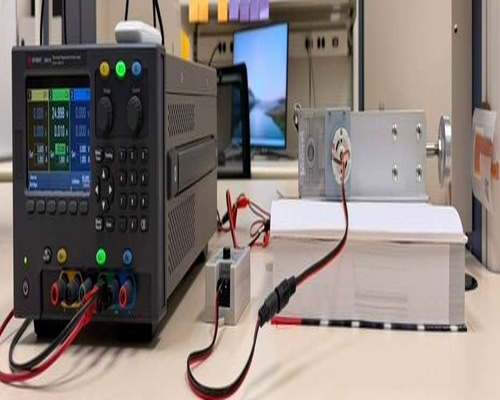
Linear Motor
The linear motor is used to produce controlled linear motion and periodic mechanical
displacement for experimental testing. In our laboratory, it is utilized to apply
repeatable mechanical actuation to triboelectric nanogenerators (TENG). The system
allows precise control of motion parameters such as displacement, speed, and frequency,
enabling systematic investigation of device performance under different mechanical
excitation conditions.
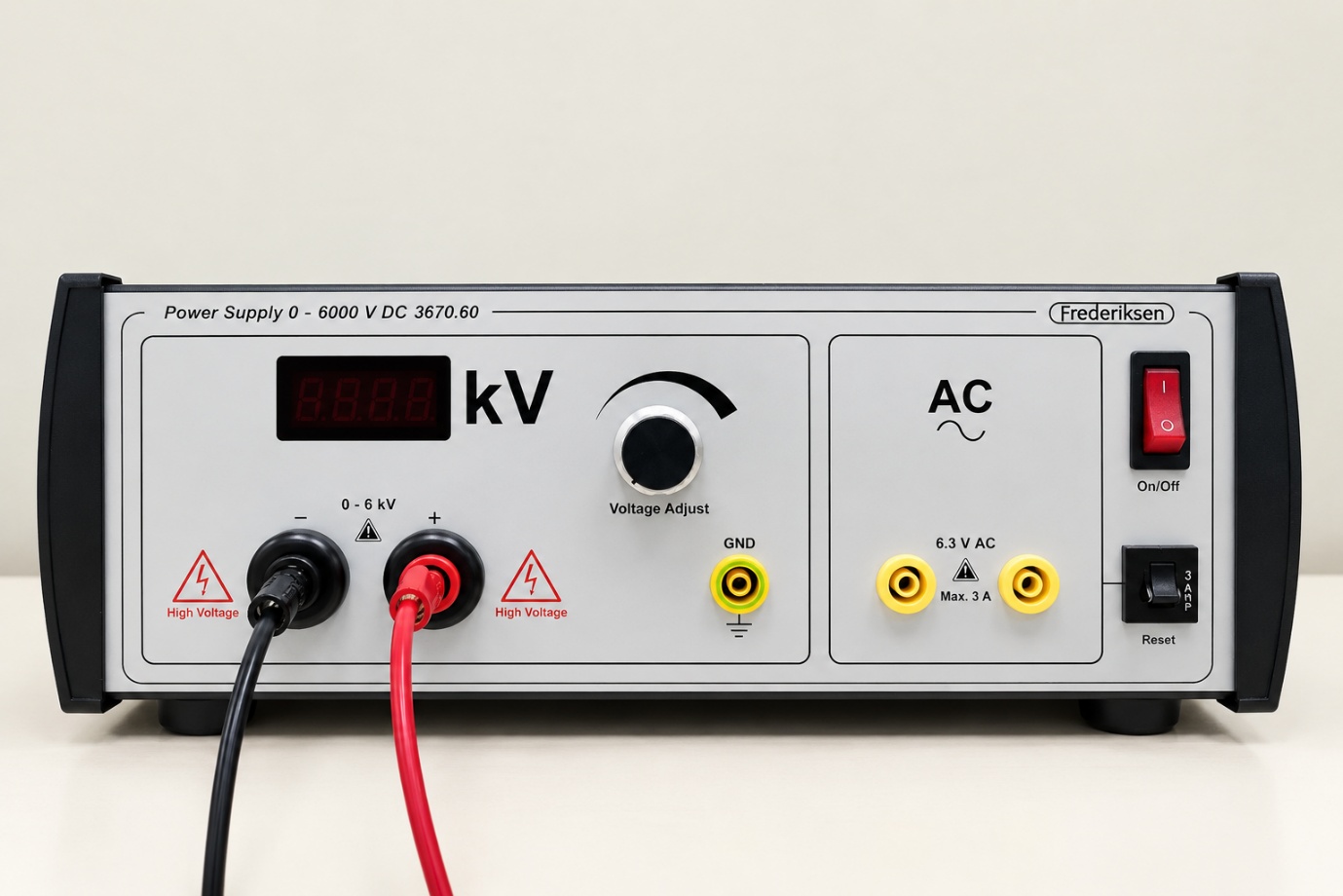
High-Voltage Power Supply (0–6 kV DC, Frederiksen)
Dell Precision 7875 Workstation
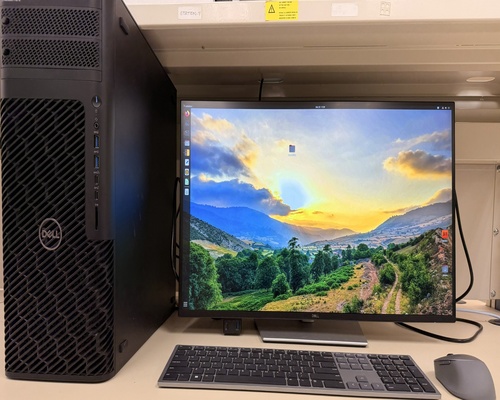
The Dell Precision 7875 workstation is a high-performance computing system designed for demanding scientific simulations, data processing, and computational modeling. Equipped with an AMD Ryzen Threadripper processor and 264 GB DDR5 RAM, the system provides exceptional multi-core performance and large memory capacity for handling complex datasets and parallel computations. In our laboratory, this workstation is used for computational materials simulations, density functional theory (DFT) calculations, device modeling, and large-scale data analysis.
Contact Angle Goniometer / Surface Characterization System
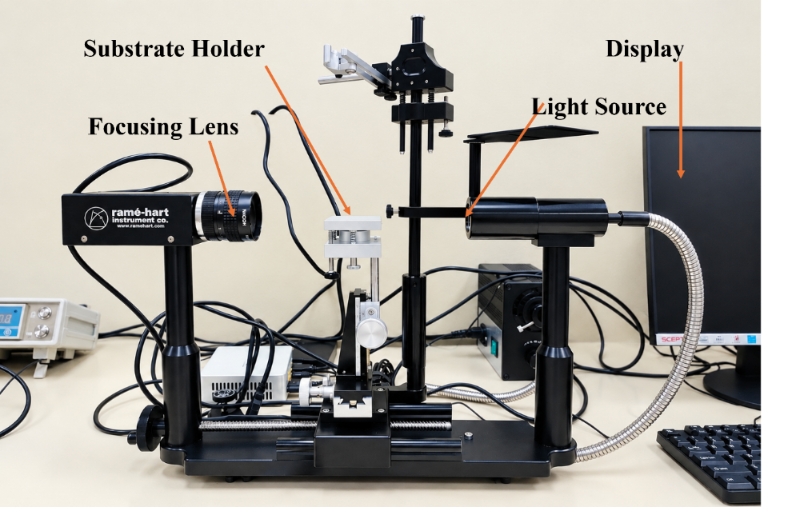
The ramé-hart optical measurement system is used to characterize the surface and wetting properties of functional materials and thin films through contact-angle measurements. The system uses a high-resolution camera, optical illumination, and precision positioning stages to capture and analyze a liquid droplet placed on a material surface. In our laboratory, this equipment is used to evaluate the wettability and surface characteristics of polymer films, nanocomposites, and other functional materials, providing important information for surface treatment, thin-film processing, and sensor development. Commercial ramé-hart systems are designed for contact-angle and related surface-characterization measurements using camera-based optical analysis.
Quasi-Static Piezoelectric d33 Meter
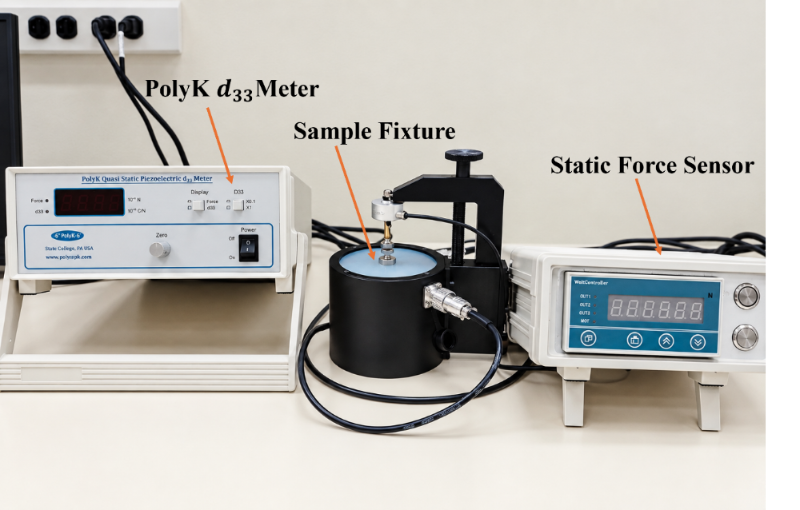
The PolyK Quasi-Static Piezoelectric d33 Meter is used to characterize the piezoelectric properties of functional materials by measuring the longitudinal piezoelectric coefficient d33. The system applies a controlled mechanical force to a piezoelectric sample and measures the resulting electrical charge response. In our laboratory, this equipment is used to evaluate piezoelectric polymers, thin films, and composite materials, including PVDF-based materials, supporting the development and characterization of piezoelectric nanogenerators (PENGs) and other energy-harvesting devices.