- the type of chemical(s) spilled,
- the amount (< 1 L),
- the hazardous characteristics of the spilled chemical,
- the location,
- the proper method for cleaning up the spill,
- the personal protective equipment available, and
- the training of the laboratory's personnel.
Research Lab Safety Plan
RBN 1007
Lab 1007 Safety Plan
1. Laboratory locations covered
|
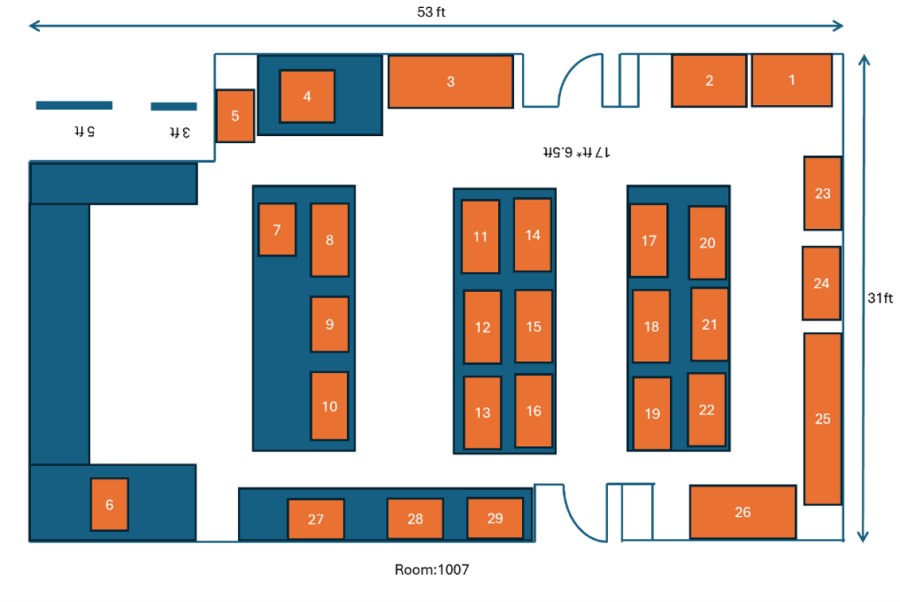
1. Biosafety Cabinet |
11. High-temperature and pressure press | 21. Vacuum Oven |
| 2. Refrigerator | 12. Stir Plates | 22. Oxygen Plasma |
| 3. Indoor plant growing tent | 13. High-speed centrifuge | 23. Corrosive storage |
| 4. Photography tent | 14. Shakers | 24. Flammable Storage |
| 5. Eye wash | 15. Film Coaters | 25. Supplies storages |
| 6. PC | 16. Vacuum Storage | 26. Supplies storages |
| 7. Microscope | 17. Ductless Fumed Hood | 27. Microbalance |
| 8. Dataphysics OC25 Tensiometer | 18. Electrospinning Box | 28. Water tank |
| 9. Brookhaven Nano DLS/Zeta potential | 19. Homogenizers | 29. Water sink |
| 10. UV-vis spectrometry | 20. Tube furnace |
2. Responsible parties for laboratory locations covered in this plan
3. Emergency contact information
- Emergency – 911
- Non-Emergency – 903-566-7300
- Emergencies (24 hrs/day, 7 days/week) – 903-566-7011
- Any Time – 903-566-7060
AFTER emergency is reported, contact one of the responsible parties above.
4. Location of SDSs, Chemical Hydiene Plan, and other laboratory documents
5. Identification of chemical and biological hazards in the laboratory
6. Identification of physical hazards in the laboratory
7. Clean-up procedures in case of a spill
-
Prevent the spread of dusts and vapors. - If the substance is volatile or can produce airborne dusts, close the laboratory door and increase ventilation (through fume hoods, for example) to prevent the spread of dusts and vapors to other areas.
-
Neutralize acids and bases, if possible. - Spills of most liquid acids or bases, once neutralized, can be mopped up and rinsed down the drain (to the sanitary sewer). However, be careful because the neutralization process is often vigorous, causing splashes and yielding large amounts of heat. Neutralize acids with soda ash or sodium bicarbonate. Bases can be neutralized with citric acid or ascorbic acid. Use pH paper to determine when acid or base spills have been neutralized.
-
Control the spread of the liquid. - Contain the spill with the spill kit materials located under the lab sink. Make a dike around the outside edges of the spill. Use absorbent materials such as vermiculite, cat litter, or spill pillows.
-
Absorb the liquid. - Add absorbents to the spill, working from the spill's outer edges toward the center. Absorbent materials, such as cat litter or vermiculite, are relatively inexpensive and work well, although they are messy. Spill pillows are not as messy as other absorbents, but they are more expensive. Note that special absorbents are required for chemicals such as hydrofluoric and concentrated sulfuric acids.
-
Collect and contain the cleanup residues. - The neutralized spill residue or the absorbent should be scooped, swept, or otherwise placed into a plastic bucket or other container. For dry powders or liquids absorbed to dryness, double bag the residue using plastic bags. Additional packaging may be required before the wastes can be transported from your laboratory. For spills of powders or solid materials, you may need to add a dust suppressant. Be sure to place descriptive labels on each container.
-
Dispose of the wastes. - Keep cleanup materials separate from normal trash. Contact your environmental health and safety officer for guidance in packaging and labeling cleanup residues. Promptly place cleanup wastes in an appropriate hazardous waste receptacle.
-
Decontaminate the area and affected equipment. - Ventilating the spill area may be necessary. Open windows or use a fan unless the area is under negative pressure. In some instances, your environmental health and safety officer can test the air to ensure that hazardous vapors are gone. For most spills, conventional cleaning products, applied with a mop or sponge, will provide adequate decontamination. If you have any question about the suitability of a decontaminating agent, seek expert advice.
8. Guidance on what to do in case of emergency
- If there is immediate danger to you, leave the laboratory immediately and call 911.
- In this laboratory, a small, incipient fire may require the use of the lab fire extinguisher (see map for location), if you are trained and it is safe to do so.
- If the building fire alarm sounds, follow emergency shutdown procedures for all running equipment and leave the building through the nearest exit.
- Know the first aid treatment for the potential hazards of your equipment that may cause bodily injury or chemical exposure. For example, some liquids when exposed to the skin should be washed with water and some should not. KNOW THE HAZARDS YOU ARE DEALING WITH BEFORE AN EMERGENCY.
- For minor physical injuries, the first aid kit is located in the sink area cabinet (see map).
- If exposed to liquid chemicals, follow the directions on the SDS. If you experience any acute symptoms, call 911.
- If exposed to vapors, leave the area and go outside for fresh air. If you experience any acute symptoms, call 911.
- If you are uncertain what to do after exposure to a particular substance, call the EH&S emergency number: 903-566-7011.
- Shelter in RBN 1007 or the basement restrooms.
9. Specific Notices for Lab 1007
RBN 1007 is not a shared space and is only for Chemical Engineering research with prior approval. The following personal protective equipment is always required: goggles, gloves, closed-toe shoes, and a lab coat. Equipment may be operated only by designated faculty members or approved users. Please see the lab arrangement and contact the faculty member responsible for each piece of equipment or area. DO NOT ATTEMPT TO USE any lab instrument without approval and proper training by the corresponding faculty member.
The equipment is operated by specific faculty members, and approval is needed. Please see the lab arrangement. Contact the faculty member responsible for each piece of equipment and area. DO NOT ATTEMPT TO USE any lab instrument without approval and proper training by the corresponding faculty.